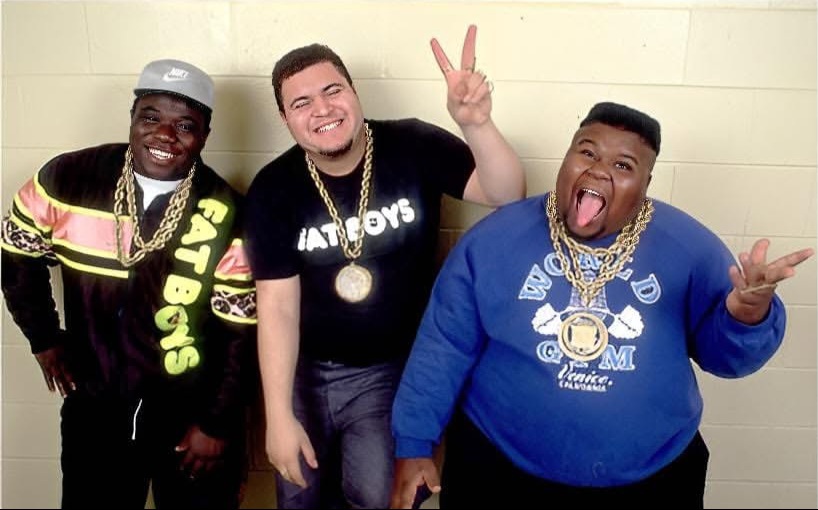
The Fat Boys are officially part of Brooklyn’s landscape in a historic way.
The legendary hip-hop trio was honored on August 22 with a street co-naming ceremony in East New York, Brooklyn, where a portion of Schenck Avenue was renamed Fat Boys Avenue. The tribute recognizes the group’s deep roots in the neighborhood and its lasting impact on hip-hop culture.
For Kool Rock-Ski, the group’s only surviving member, the celebration was both a proud and emotional moment. He stood at the ceremony as the Fat Boys’ legacy was permanently attached to the Brooklyn community where the group first began making its mark in the early 1980s.
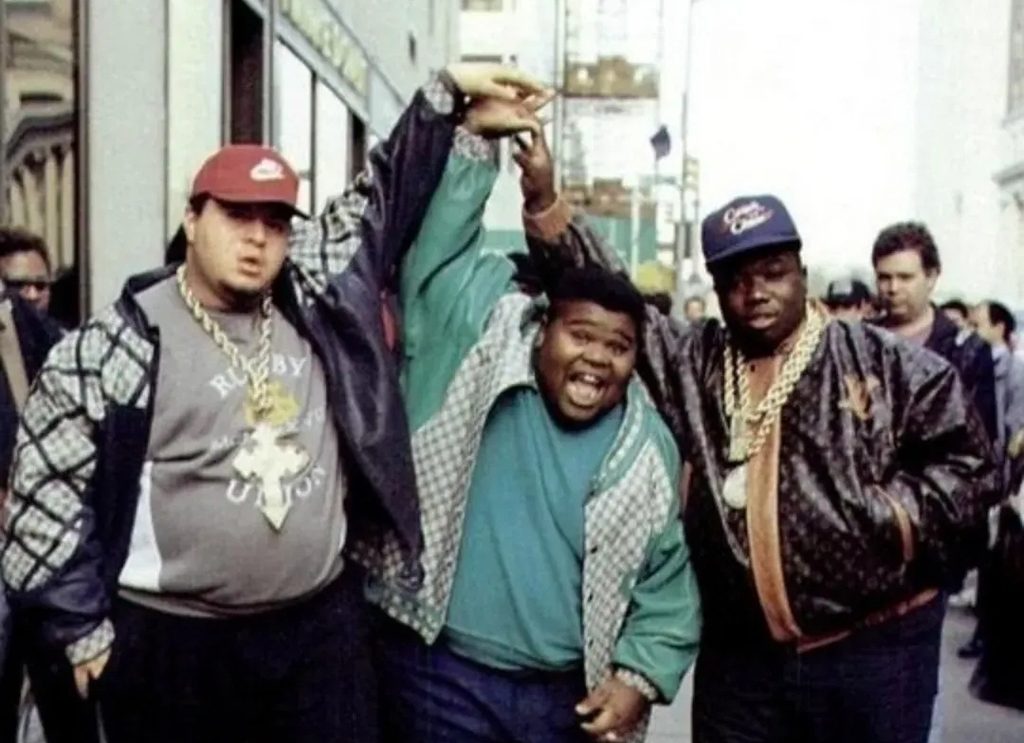
Originally known as Disco 3, the group featured Damon “Kool Rock-Ski” Wimbley, Mark “Prince Markie Dee” Morales and Darren “Buff Love” Robinson, better known as the Human Beat Box. Their combination of humor, beatboxing, charismatic performances and infectious rhymes helped introduce hip-hop to a much broader mainstream audience.
The Fat Boys became more than recording artists. They successfully crossed into film, appearing in Krush Groove in 1985, Knights of the City in 1986 and Disorderlies in 1987. They also teamed up with the Beach Boys for the memorable 1987 hit “Wipe Out,” showcasing the group’s ability to bridge hip-hop with other musical genres.
The street dedication also carries a bittersweet significance because two members were not there to witness the honor.
Buff Love died in December 1995 at just 28 years old after suffering a heart attack. Prince Markie Dee died in February 2021 at age 52 from congestive heart failure. Their deaths left Kool Rock-Ski as the last surviving member of the pioneering trio.
Despite those losses, the Fat Boys’ influence continues to be felt throughout hip-hop. The group helped popularize beatboxing, comedy-infused rap and the idea that hip-hop artists could successfully move between music, movies and mainstream entertainment.
Now, with Fat Boys Avenue, Brooklyn has created a permanent reminder of the three artists who helped put East New York on the hip-hop map.
For a group that helped bring the joy and creativity of early hip-hop to millions of people, the street recognition serves as a long-overdue homecoming—and a lasting tribute to the legacy of the Fat Boys.