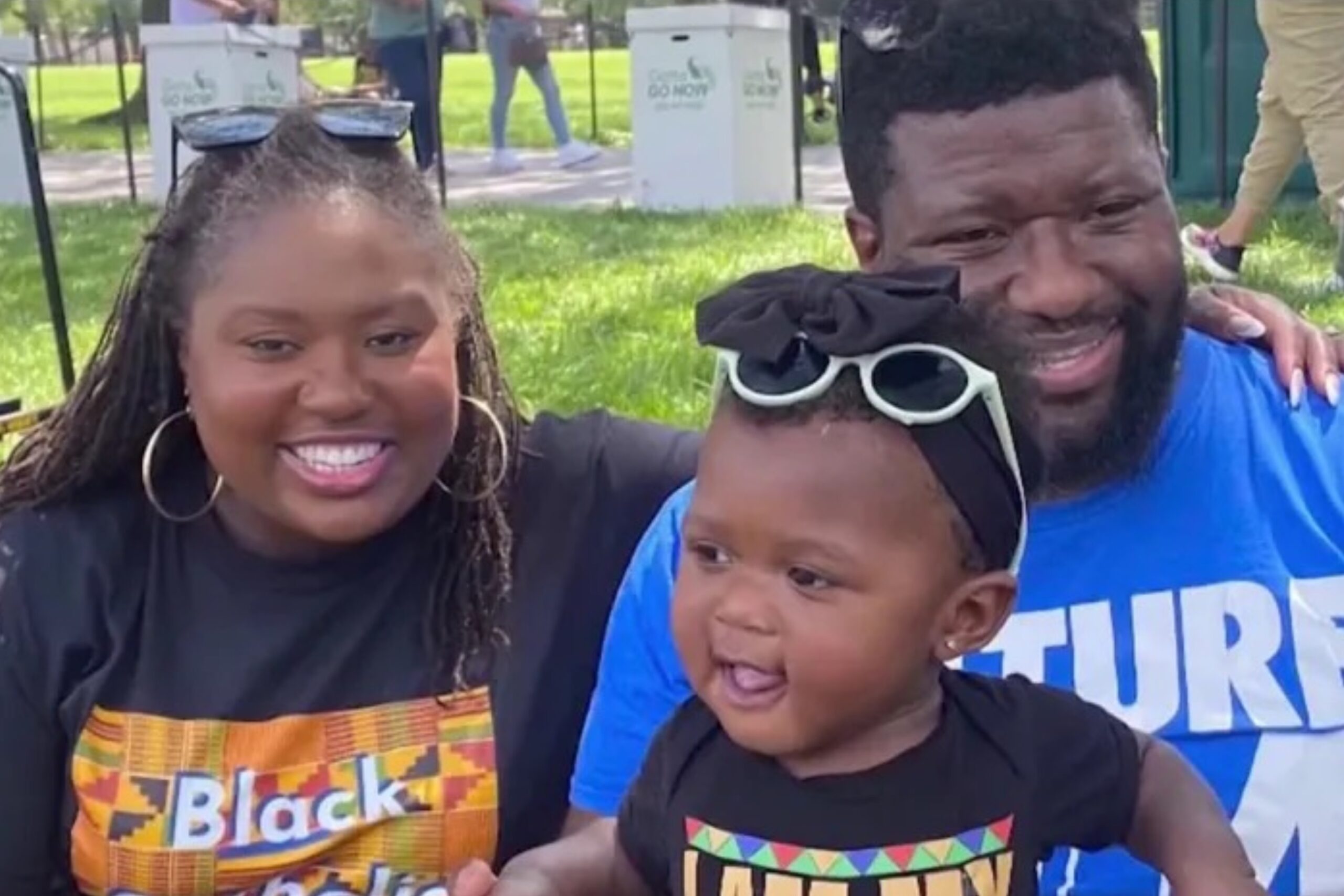
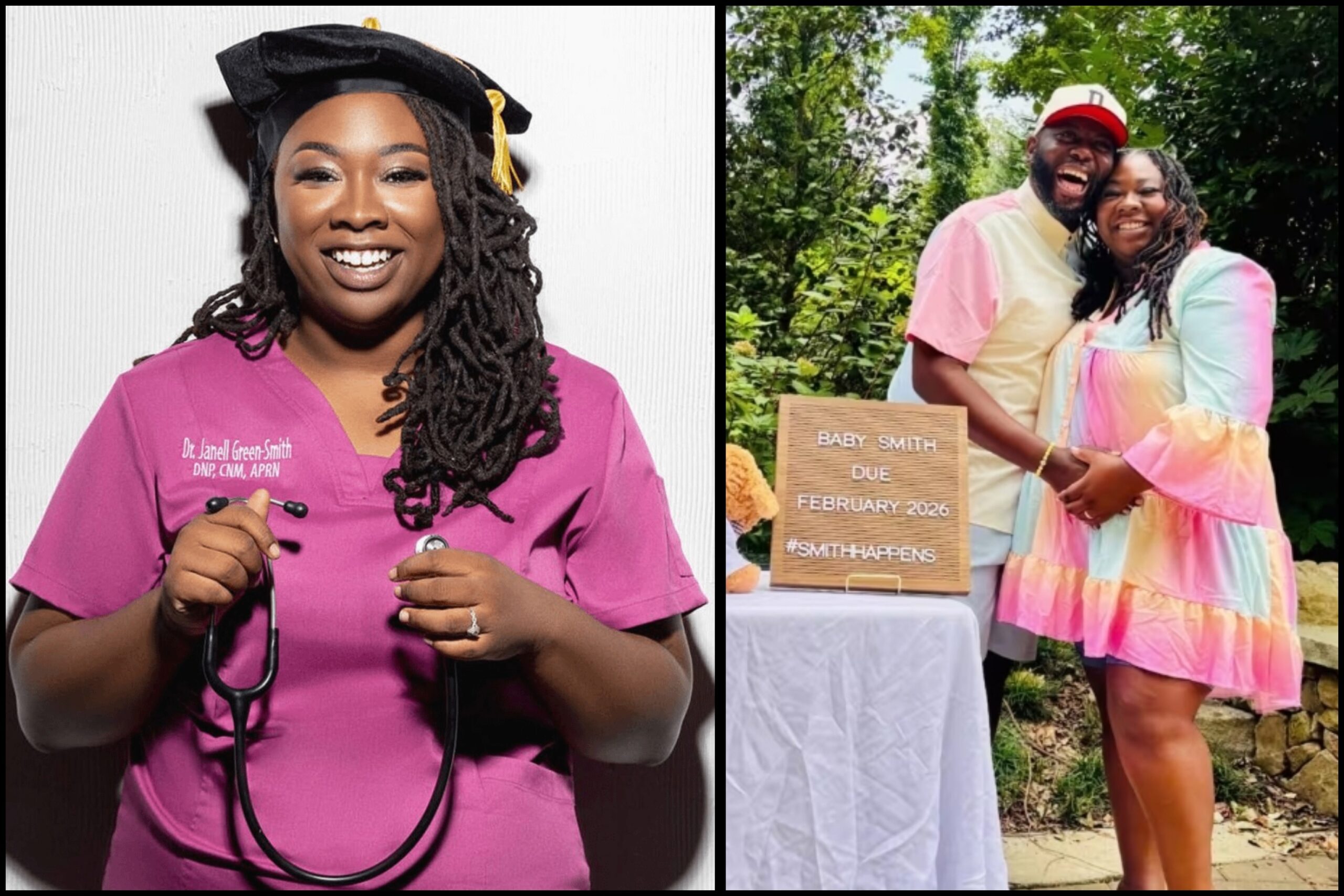
Family, friends, community leaders, and national advocates gathered this week at The Purpose Place in Spartanburg, South Carolina, to celebrate the life and legacy of Dr. Janell Green Smith — the beloved midwife and maternal health advocate who died from complications shortly after giving birth. The service, led by Pastor Kenneth Leonard of The Purpose Place and his wife, Grammy-winning gospel artist Tasha Cobbs Leonard, honored a life of service, love, and unfulfilled promise.
Gospel music provided strength and solace throughout the ceremony, including a deeply personal moment when Dr. Green Smith’s husband, Daiquan Smith, paid tribute to his late wife by singing a heartfelt song, drawing tears and applause from those gathered.
Dr. Green Smith, 31, a certified nurse-midwife and doctor of nursing practice, had dedicated her career to supporting parents and combating the persistent racial disparities in maternal healthcare. She was widely known for her compassionate care — attending hundreds of births and empowering expectant mothers, especially Black women — long before her own tragic death earlier this month after delivering her first child, a daughter named Eden, who remains in a neonatal intensive care unit.
At the homegoing celebration, family members spoke of Dr. Green Smith’s unwavering spirit and deep commitment to others. Many attendees wore symbols of strength and resilience, recalling her as both a healer and a friend whose influence touched lives far beyond her professional work.
Pastor Kenneth Leonard delivered a eulogy that drew both tears and affirmations of hope, emphasizing Dr. Green Smith’s legacy as one rooted in compassion and advocacy. Gospel music from Tasha Cobbs Leonard and others offered solace and uplifted the congregation as they reflected on a life taken too soon.
A Life of Advocacy and Irreplaceable Loss
Born and raised in Charleston, Dr. Green Smith was inspired by her mother’s work as a home health nurse and committed early in life to improving childbirth outcomes. After earning her undergraduate nursing degree and later a doctorate in nursing practice with a focus on midwifery, she became a tireless champion for respectful, evidence-based and equitable care. “She walked into her calling,” a longtime colleague once said.
Her reputation as the “Loc’d Midwife” — a reference to her hairstyle and her vibrant personality — was matched by her quiet strength in the delivery room. Women she cared for often spoke of her presence, attentiveness and the way she made them feel safe during one of life’s most vulnerable moments.
Yet the very system she worked to change proved unforgiving. Shortly after delivering her daughter by cesarean section in late December due to preeclampsia, Dr. Green Smith experienced complications from a ruptured incision site. Despite emergency surgery, she died early on January 1, 2026.
A Personal Tragedy With National Reverberations
Dr. Green Smith’s death has fueled intense national conversations about maternal health in America — especially for Black women, who face significantly higher risks of pregnancy-related complications and death than their white counterparts. According to recent data, Black women in the U.S. are more than three times as likely to die from pregnancy-related causes, a disparity that persists regardless of education or socioeconomic status.
Advocates and organizations, including the American College of Nurse-Midwives, have described her passing as “heartbreaking and unacceptable,” noting that if someone as knowledgeable and prepared as Dr. Green Smith could not survive childbirth, the crisis demands urgent systemic change.
National groups like the National Black Nurses Association and Planned Parenthood have also issued statements highlighting the structural failures in care that disproportionately endanger Black mothers — calling for accountability, better education of healthcare providers, and improved postpartum monitoring.
Legacy and Forward Movement
At The Purpose Place service, calls to transform grief into action resonated strongly. Speakers encouraged those present to honor Dr. Green Smith’s memory not only by celebrating her life but by continuing her work — strengthening support for maternal health programs, expanding access to quality care, and pushing for policies that protect all birthing people.
As the congregation sang and shared stories of healing and hope, Dr. Green Smith’s family expressed gratitude for the outpouring of love from their community and beyond. In the face of profound sorrow, they reiterated a message of determination: that her legacy will live on in the lives she helped bring into the world and in the ongoing fight to make childbirth safer for everyone.